Serving Businesses, Owners, and Advisors
Cost Segregation Methodology
Engineering-Appraisal-Based | IRS-Defensible | Institutionally Aligned
Cost segregation is often presented as a tax optimization technique.
At us, it is practiced as a discipline of valuation economics and engineering-based asset classification, designed for assets where capital intensity, system complexity, and regulatory scrutiny materially affect recoverability.
We do not approach cost segregation as a mechanical reclassification of costs.
We approach it as capital recovery under uncertainty, requiring professional judgment, technical understanding, and conservative documentation.
This methodology is designed for environments where:
- Capital commitments are irreversible
- Asset lives are heterogeneous
- IRS, audit, and counterparty scrutiny is real
- The cost of being wrong is material
Foundational Principles
Our cost segregation work is governed by three foundational principles:
1. Economic Function over Architectural Form
Assets are classified based on how they function economically and operationally — not how they resemble building components.
2. Engineering Before Accounting
Systems must be understood technically before they are classified for tax purposes.
3. Appraisal Before Allocation
Capital must be reconciled and abstracted correctly before recovery periods are applied.
These principles distinguish defensible capital recovery from aggressive reclassification.
Step 1 — Engineering-Based Asset Identification
We begin with a technical understanding of how the asset is actually designed and operates, including:
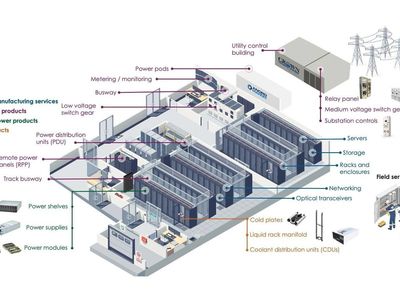
- Electrical and mechanical systems
- Process and production infrastructure
- Structural supports tied to equipment and systems
- Utility, power, and control architectures
- Redundancy and resiliency elements where applicable
This ensures assets are classified based on economic function, not visual appearance or template categories.
Particularly in infrastructure, industrial, data center, and energy assets, this step is essential to prevent misclassification of system-driven capital as generic building components.
Step 2 — Appraisal-Based Capital Allocation
Before depreciation classification, we apply appraisal discipline to:
- Reconstruct total project basis
- Abstract non-depreciable land using market and residual techniques
- Identify and separate site improvements
- Reconcile all allocations internally
- Prevent distortions caused by improper shell or land allocation
This ensures depreciation outcomes reflect capital reality, not aggressive modeling or percentage-based shortcuts.
Land abstraction is treated as a critical risk area — not a residual afterthought.
Step 3 — Functional Asset Classification
Only after engineering identification and capital allocation do we classify assets into recovery periods, based on:
- IRS definitions and applicable guidance
- Functional relationship to production, power, or operations
- Physical and economic depreciation characteristics
- Integration with the larger system architecture
This process ensures that §1245, §1250, and non-depreciable components are assigned based on function and evidence, not optimization targets.
Step 4 — Internal Reconciliation and Quality Control
All studies undergo internal reconciliation to ensure:
- Total allocations match capitalized project costs
- No artificial inflation of qualifying property
- Logical consistency across asset classes
- Cross-validation between engineering, appraisal, and tax treatment
This step is essential to prevent:
- Over-allocation to short-life property
- Misalignment between systems and classifications
- Exposure during IRS or audit review
IRS-Defensible Documentation
Our documentation is structured to withstand:
- IRS examination
- CPA and auditor review
- Transactional due diligence
- Institutional governance standards
Every study emphasizes:
- Transparent classification logic
- Engineering support for functional assignments
- Full reconciliation to total project basis
- Conservative interpretation aligned with IRS guidance
- Documentation suitable for Form 3115 and related filings
Acceleration is pursued only when supported by function, documentation, and law — not aggressive reclassification.
Bonus Depreciation: Methodology Over Mechanics
With the restoration of 100% bonus depreciation for qualifying property placed in service on or after January 20, 2025, the quality of asset classification has become more consequential than ever.
Poorly executed or template-based studies may:
- Misclassify long-life property
- Over-allocate to qualifying classes
- Trigger IRS exposure
- Create downstream audit and financial risk
Our methodology ensures that bonus depreciation is:
- Applied conservatively
- Technically supported
- Institutionally defensible
Bonus depreciation amplifies both opportunity and risk — which makes methodology, not speed, the governing factor.
Why This Matters
Clients engage US Valuation for cost segregation when:
- Capital commitments are large
- Asset complexity is structural, not marginal
- Audit and governance standards are high
- The cost of being wrong is irreversible
- Traditional studies feel incomplete or overly aggressive
Our methodology is designed for defensibility, transparency, and long-term credibility, not short-term optimization.
Bottom Line
Cost segregation, when properly executed, is not a tax strategy.
It is a capital recovery discipline grounded in valuation economics, engineering understanding, and appraisal rigor.
At us, our methodology ensures that depreciation outcomes are:
- Aligned with economic reality
- Technically supported
- IRS-defensible
- Suitable for audit and institutional scrutiny
- Scalable across infrastructure and commercial asset classes
👉 Discuss Feasibility and Methodology
A confidential discussion to assess whether cost segregation is appropriate and defensible for your asset.